How Performance Marketing Impacts Modern Market Growth.
Performance Marketing: Drives Business Growth:
Businesses today have more ways than ever to reach potential customers. From Google searches and social media to email campaigns and paid advertisements, there are plenty of opportunities to get noticed. But simply running ads or posting regularly does not guarantee business growth.
This is where performance marketing becomes important.
Performance marketing focuses on measurable results. Instead of only looking at how many people saw an advertisement, businesses can track actions such as clicks, leads, purchases, sign-ups, and revenue. This makes it easier to understand what is working, what is not, and where the marketing budget should go.
For modern businesses, this approach can make marketing more focused, flexible, and connected to actual business goals.
What Is Performance Marketing?
Performance marketing is a results-driven approach to digital marketing where campaigns are planned around specific actions or outcomes.
For example, a business may want to:
- Generate more website leads
- Increase online sales
- Get more phone calls
- Drive traffic to a landing page
- Increase app downloads
- Improve return on advertising spend
The important part is that these actions can be measured.
Channels such as Google Ads, social media advertising, affiliate marketing, influencer marketing, and paid search can all play a role in performance marketing. Depending on the campaign, marketers may track metrics such as cost per click (CPC), cost per lead (CPL), cost per acquisition (CPA), conversion rate, and return on ad spend (ROAS).
This gives businesses something valuable: a clearer picture of where their marketing efforts are producing results.
Why Performance Marketing Matters for Business Growth
Traditional marketing can sometimes make it difficult to know exactly what caused a customer to take action. A business might know that an advertisement reached thousands of people, but that does not necessarily mean those people became customers.
Performance marketing takes a different approach.
The focus is on connecting marketing activity with measurable business outcomes. Google, for example, recommends setting a clear advertising goal first and then choosing the metrics that best indicate whether that goal is being achieved.
This can help businesses make better decisions about their marketing budgets.
Instead of continuing to spend money on a campaign simply because it receives impressions, marketers can look at whether those impressions are turning into clicks, leads, sales, or other valuable actions.
1. It Helps Businesses Understand What Works
One of the biggest advantages of performance marketing is the amount of data available.
Imagine an online business runs two Google Ads campaigns. One campaign receives 1,000 clicks but generates only five enquiries. Another receives 500 clicks and generates 30 enquiries.
At first glance, the first campaign may look more successful because it attracted more traffic. But the second campaign is clearly producing better business results.
This is why looking beyond basic traffic numbers is important.
Marketers can study campaign performance, keywords, audiences, advertisements, landing pages, and conversions to identify where improvements are needed. Google Ads also provides reporting on clicks, CTR, keywords, and search terms to help advertisers understand campaign performance.
2. It Makes Marketing Budgets More Efficient
Every business has a marketing budget, whether it is a small local company or a growing online brand.
Performance marketing can help businesses make more informed decisions about where that money goes.
If one campaign consistently generates quality leads at a lower cost while another produces very little, the business has useful information to work with. It can adjust budgets, change targeting, test new advertisements, or pause campaigns that are not performing well.
This does not mean every campaign will produce immediate profits. Marketing still involves testing, competition, customer behaviour, and timing.
However, having measurable data gives businesses a much stronger starting point for making decisions.
3. It Supports Faster Testing and Improvement
Customer behaviour changes quickly.
An advertisement that performs well today may not perform as well a few months later. A new competitor may enter the market. Search behaviour may change. Customers may respond differently to a new offer or creative.
Performance marketing allows marketers to test different approaches and learn from the results.
For example, a business might test:
Ad A: “Get Your Free Consultation Today”
Ad B: “Book a Free 30-Minute Consultation”
If one version generates more qualified leads, the business can use that information to improve future campaigns.
This process of testing, measuring, and improving is one of the reasons performance marketing fits well with modern digital marketing.
4. It Helps Reach the Right Audience
Getting your message in front of thousands of people is not always useful if most of them have no interest in what you sell.
Modern advertising platforms provide different targeting options that can help businesses reach people based on factors such as search behaviour, interests, location, demographics, and previous interactions.
For example, a local digital marketing agency may want to reach business owners within a particular city rather than advertise to people across an entire country.
Similarly, an e-commerce business selling sports products may want to focus its advertising on people who are more likely to be interested in those products.
The goal is not simply to reach more people. It is to reach more relevant people.
5. It Connects Marketing With Real Business Goals
Another major benefit is that performance marketing can connect marketing activities with wider business objectives.
A company may have a goal of increasing monthly sales by 20%. A service business may want to generate 100 qualified leads. An online course provider may want more course registrations.
The marketing strategy can then be built around those objectives.
This is an important shift from focusing only on surface-level numbers. A campaign receiving thousands of views may look impressive, but views alone do not tell the complete story.
Modern marketers increasingly need to connect marketing measurement with business outcomes such as revenue, profit, and customer lifetime value.
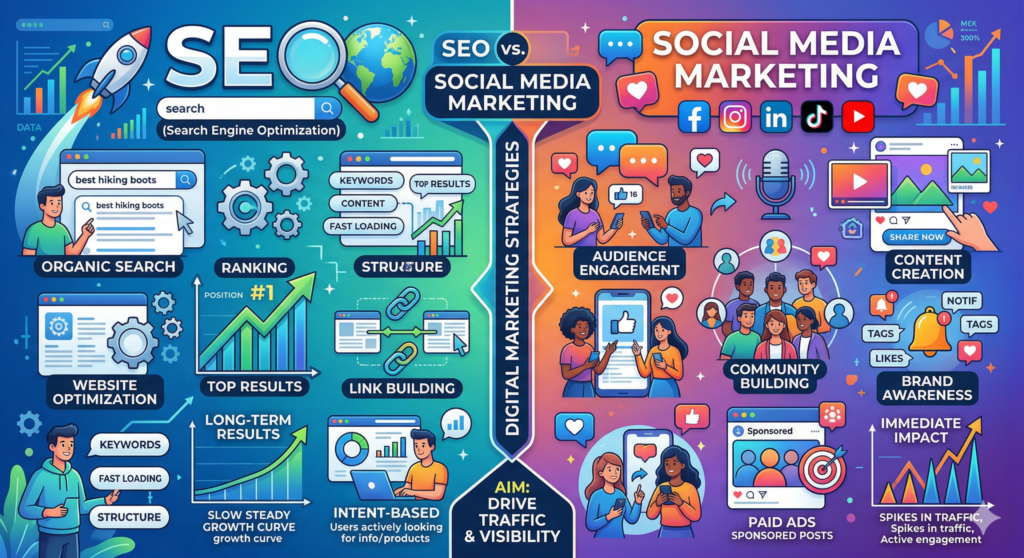
Performance Marketing and SEO Work Together
Performance marketing does not mean businesses should ignore SEO.
In fact, SEO and paid advertising can work alongside each other.
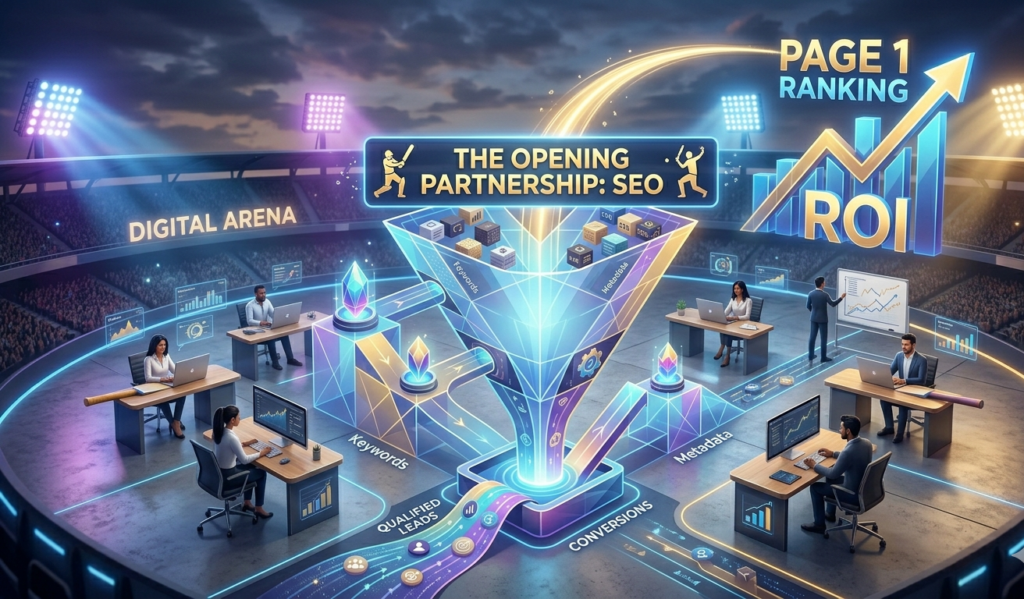
SEO helps businesses build organic visibility in search engines over time, while paid advertising can provide immediate visibility for relevant searches. Google explains that SEO focuses on improving organic visibility, while PPC allows businesses to pay for placement in search results.
For example, a business could use Google Ads to promote an important service while simultaneously creating SEO-focused content to build organic traffic.
This combination can create a more balanced digital marketing strategy.
What Metrics Should Businesses Track?
There is no single metric that works for every campaign. The right KPIs depend on the goal.
Some commonly used performance marketing metrics include:
- CTR (Click-Through Rate): Shows how often people click an advertisement after seeing it.
- CPC (Cost Per Click): Shows how much each click costs.
- CPL (Cost Per Lead): Helps measure the cost of generating a lead.
- CPA (Cost Per Acquisition): Measures the cost of acquiring a customer or completing a desired action.
- Conversion Rate: Shows the percentage of visitors who complete a desired action.
- ROAS (Return on Ad Spend): Compares advertising revenue with advertising costs.
Tracking these numbers helps marketers understand whether campaigns are moving in the right direction.
Is Performance Marketing Right for Every Business?
Performance marketing can be useful for many businesses, but it should not be treated as a magic solution.
A successful campaign still needs the right audience, a strong offer, good advertising creatives, relevant keywords, a useful landing page, accurate tracking, and regular optimisation.
For example, sending paid traffic to a slow or confusing website can result in poor conversions even if the advertisement itself is performing well.
This is why performance marketing should be viewed as part of a larger digital marketing strategy rather than something that operates on its own.
The Future of Performance Marketing
Digital marketing is becoming increasingly data-driven. At the same time, customer journeys are becoming less straightforward. People may discover a brand through social media, search for reviews on Google, visit the website later, and finally make a purchase through another device.
This makes measurement more complicated, but also more important.
Google has highlighted how fragmented customer journeys and changing consumer behaviour are pushing marketers toward better measurement and stronger connections between marketing activity and actual business growth.
Artificial intelligence is also changing how marketers analyse data, create campaigns, understand audiences, and optimise advertising.
The businesses that benefit most will not necessarily be the ones spending the most money. They will be the ones that understand their customers, set clear goals, measure meaningful results, and continually improve their approach.
Final Thoughts
Performance marketing has changed the way businesses think about digital growth.
Instead of simply asking, “How many people saw our advertisement?”, businesses can ask more useful questions:
How many people clicked? How many became leads? How many purchased? How much did each customer cost? And did the campaign generate a worthwhile return?
That shift from simply being visible to being measurable can make marketing decisions much more practical.
For small businesses especially, understanding what is working can help prevent wasted spending and create a clearer path toward growth.
At Rachna Digital Hub, the focus is on helping businesses build a stronger online presence through SEO, paid advertising, social media, content, and practical digital marketing strategies. When these channels are planned around clear goals and measurable results, they can become much more than individual marketing activities—they can support sustainable business growth.
How Performance Marketing Impacts Modern Market Growth. Read More »


 Two of the most popular