
SEO vs Social Media Marketing – Which is Better for Beginners?
Digital marketing offers many ways to promote a business online, but two of the most popular methods are SEO and Social Media Marketing. Beginners often get confused about which one is better and where they should start. Both strategies help increase website traffic, brand awareness, and leads, but they work differently. In this guide, we will compare SEO vs Social Media Marketing in simple terms so beginners can choose the best option.
What is SEO?
SEO stands for Search Engine Optimization. It is the process of optimizing your website so it ranks higher on search engines like Google. When people search for keywords related to your business, your website appears in search results.
For example, if someone searches digital marketing services, SEO helps your website show on the first page. The main goal of SEO is to get organic traffic without paying for ads.
Key Elements of SEO
- Keyword research
- On-page optimization
- Technical SEO
- Content creation
- Backlink building
- Website speed optimization
SEO is a long-term strategy that builds trust and authority over time.
What is Social Media Marketing?
Social media marketing involves promoting your business on platforms like Facebook, Instagram, LinkedIn, and Twitter. It helps you connect directly with your audience and build brand awareness.
Businesses use social media to share posts, videos, stories, and promotions. Social media marketing can generate quick traffic and engagement.
Key Elements of Social Media Marketing
- Creating social media profiles

- Posting engaging content
- Using hashtags
- Running ads
- Interacting with followers
- Sharing images and videos
Social media marketing focuses on engagement and brand visibility.
SEO vs Social Media Marketing: Major Differences
1. Traffic Source
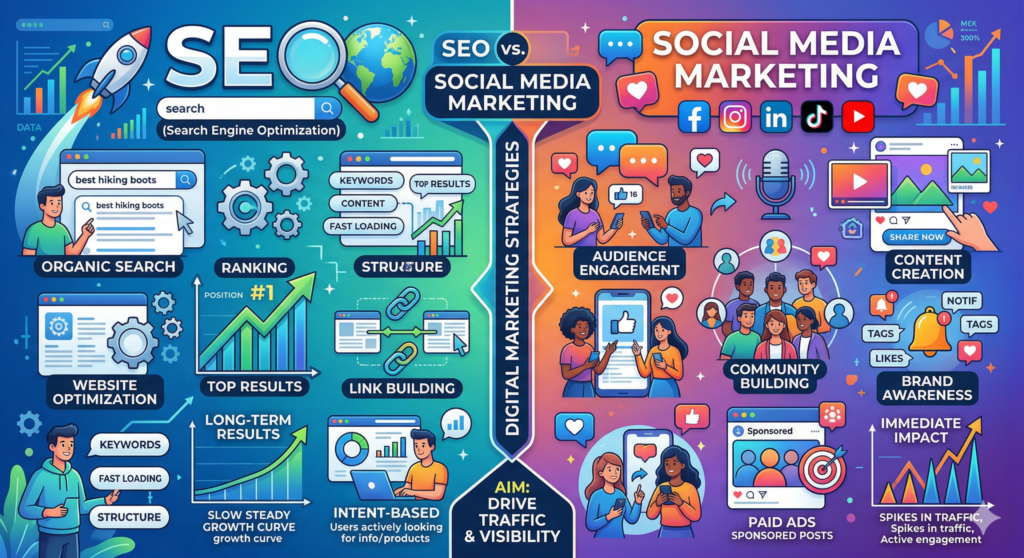
SEO brings traffic from search engines. Users visit your website when they search for something. This traffic is highly targeted because users already have intent.
Social media marketing brings traffic from social platforms. People may not always be searching for your services, but they discover your brand through posts.
2. Time to See Results
SEO takes time. It may take weeks or months to rank your website. However, once your site ranks, it can bring consistent traffic.
Social media marketing gives faster results. A single viral post can bring instant traffic and engagement.
3. Cost
SEO mainly requires time and effort. You can do SEO without spending money, although tools may help.
Social media marketing can be free, but many businesses use paid ads to increase reach. Ads require a budget.
4. Long-Term Benefits
SEO offers long-term benefits. A well-optimized blog can generate traffic for years.
Social media posts have a short life. Engagement usually decreases after a few days.
5. Audience Engagement
SEO focuses more on search traffic. Interaction happens when users visit your website.
Social media marketing allows direct interaction. You can reply to comments, messages, and build relationships.
Advantages of SEO for Beginners
SEO is beneficial for beginners because:
- It brings free organic traffic
- Builds website authority
- Helps long-term growth
- Improves brand credibility
- Generates high-quality leads
If your goal is to grow your website and get consistent traffic, SEO is a strong option.
Advantages of Social Media Marketing for Beginners
Social media marketing is also useful for beginners because:
- Easy to start
- No technical knowledge required
- Quick visibility
- Helps build brand awareness
- Encourages direct communication
If you want quick engagement and brand visibility, social media marketing is helpful.
When Should Beginners Choose SEO?
Beginners should focus on SEO when:
- They have a website or blog
- They want long-term traffic
- They want to rank on Google
- They are willing to wait for results
- They want organic leads
SEO is ideal for bloggers, service providers, and businesses with websites.
When Should Beginners Choose Social Media Marketing?
Beginners should focus on social media marketing when:
- They want quick traffic
- They don’t have a website yet
- They want brand awareness
- They want to interact with customers
- They promote visual products
Social media marketing works well for small businesses, influencers, and startups.
Can You Use Both SEO and Social Media Marketing?
Yes, the best strategy is to use both. SEO and social media marketing work better together.
For example:
- Write SEO-friendly blog posts
- Share blog posts on social media
- Drive traffic from social platforms
- Increase engagement
- Improve brand visibility
Using both strategies helps maximize online growth.
Which is Easier for Beginners?
Social media marketing is easier to start. You can create an account and start posting immediately.
SEO requires learning keywords, content writing, and optimization. However, once you learn SEO basics, it becomes easier.
Which Brings Better Results?
Both methods give good results, but it depends on your goal.
If your goal is long-term traffic, SEO is better.
If your goal is quick visibility, social media marketing is better.
If your goal is business growth, use both together.
Best Strategy for Beginners
Here is a simple strategy:
- Start with social media marketing
- Build audience and awareness
- Create a website
- Start SEO optimization
- Share content on social media
- Combine both methods
This approach gives both quick and long-term results.
Conclusion
SEO and Social Media Marketing are both powerful digital marketing strategies. SEO helps you get long-term organic traffic and build website authority, while social media marketing provides quick visibility and engagement. For beginners, social media marketing is easier to start, but SEO offers better long-term benefits.
The best approach is to combine both strategies. Use SEO to rank your website on search engines and social media marketing to promote your content and connect with your audience. By using both methods together, beginners can grow their online presence, increase traffic, and generate more leads effectively.
